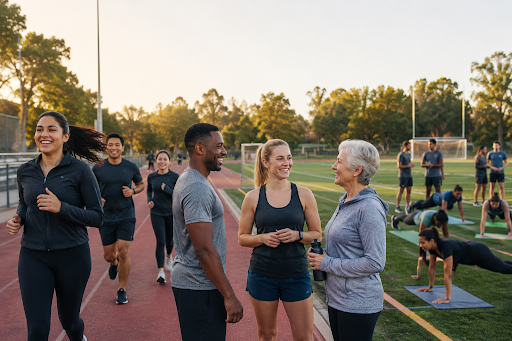
Getting people to start exercising is not that hard. Getting them to keep exercising is a different story. The fitness industry has been trying to figure out how to make exercise a habit for people. And the answer is becoming clear: people are more likely to keep exercising when they’re part of a fitness community. This is one of the things we have learned from studying how people behave when it comes to fitness. It is changing how gyms and fitness coaches think about what they offer to people who’re interested in fitness.
Why Most Exercise Resolutions Fail
January gym memberships are something of a cultural joke precisely because the pattern is so predictable. Motivation spikes, behavior changes temporarily, and then gradually reverts to baseline. The failure isn’t usually about willpower or even fitness knowledge. It’s about the structure or lack thereof supporting the behavior change.
Exercising alone can be really tough to keep up. When you are exercising alone, you do not have anyone to hold you accountable you do not have a community to support you. You do not have a structure to follow. Your motivation will go up and down. Your life will get in the way of your exercise routine. And without a structure to help you stay on track, you will probably find that exercising is not a priority for you anymore.
What Structured Communities Provide That Solo Exercise Cannot
The fitness industry insights from behavioral research consistently highlight several mechanisms through which community structures sustain exercise behavior. Social accountability is primary – when other people know whether you showed up, the cost of not showing up increases. This is exactly why group fitness classes, team sports, and training partnerships have dramatically better adherence rates than solo gym visits.
Structured communities also provide coaching and progression frameworks that keep exercise interesting and challenging. Without progression, people can get bored with their exercise routine and stop exercising. With good coaching in a community context, people can work together to overcome challenges and stay motivated. This can make a difference in how long people keep exercising.
The CrossFit Effect and Its Broader Lessons
CrossFit’s remarkable growth and retention rates provided some of the most compelling fitness industry awareness of the past two decades. Its success wasn’t primarily about its training methodology, though that was certainly effective. It was about its community model. The box gym model created strong in-group identity, daily programming that removed decision fatigue, coaching that maintained quality standards, and competitive elements that engaged participants emotionally in their own progress.
Similar community effects have been documented in running clubs, recreational sports leagues, yoga studios with strong community cultures, and martial arts dojos. The common thread is that the exercise becomes secondary. People show up for the community and the exercise happens as a consequence.
Designing Exercise Communities for Long-Term Behavior Change
For fitness entrepreneurs and facility operators, these insights have practical implications. Investments in community infrastructure onboarding programs that integrate new members socially, recognition systems that celebrate milestones, events that build relationships outside of workouts often produce better retention outcomes than investments in equipment. The most expensive equipment in the world doesn’t keep members coming back the way genuine belonging does.
Digital fitness platforms that have struggled with engagement are now studying these fitness industry perceptions carefully, attempting to replicate community dynamics in virtual environments through challenges, leaderboards, small group features, and live coaching interactions.
The future of fitness is communal. The most durable fitness behaviors are social behaviors, embedded in communities with structures that support consistency, progression, and genuine human connection. For anyone who has struggled to maintain an exercise habit, the prescription is less about trying harder alone and more about finding the right community. And for the fitness industry, building those communities is both the greatest service they can offer and as a growing body of fitness industry insights confirms their most effective retention strategy!