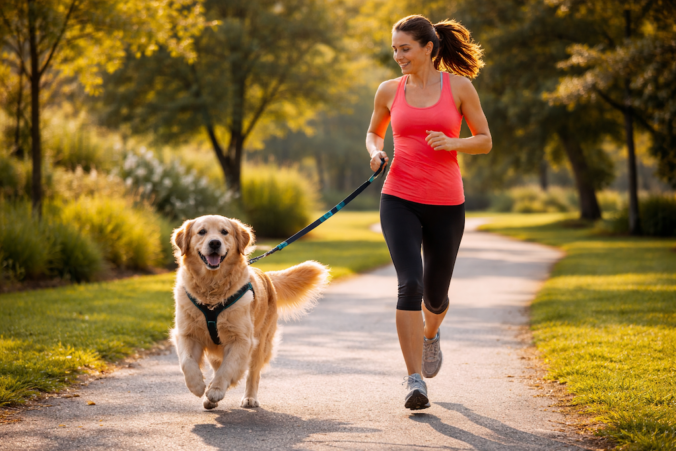
Ever thought about making your daily run a shared adventure with your dog? There are lots of pet owners across the United States slowly realizing that running with a dog can be really great motivation, fitness, and bond-strengthening.
If you happen to be one of them, don’t just go putting on your running shoes and snapping on a random harness – find out whether it is even safe for both of you. This means from understanding your dog’s physical readiness to having the right gear and training approach.
A little preparation-related time goes a long way here. Whether you run for fun or for the next event to train, doing it the right way really matters!
Is Your Dog Physically Ready?
The first question is simple: can your dog run? Age, breed, size, and health come into play to a great extent. Young dogs should not be engaged in prolonged runs until full bone maturation is achieved; older dogs deserve short and relaxed runs. If you have a little-leg dog, like a Yorkshire Terrier, it will accompany you for short distances, provided there are long breaks.
It’s best to take your dog to the vet for a good checkup before starting anything. But really, one test would be to see if the dog can go for a vigorous 20-30 minute walk without actually flagging out; if they can do this, you would not have any problem.
Start Slow and Train Smart
Before doing anything tiring, dogs also need stamina building. They should begin with jogging short distances, interspersed with walking. For instance, one will jog for a minute, walk for two, then repeat. Over time, the running time can be slowly increased.
Watch the dog closely, checking if they are pulling back, lagging, or panting too hard; those are signs it’s time to slow down. Keep in mind that it is teamwork, not a race.
Safety Tips You Shouldn’t Ignore
Always put safety first. Avoid running in extreme heat or humidity during the day with a small dog. Early mornings and evenings are great for this. And of course, you will have your water supply for both of you, dog and human.
If a delightful lawn or dirt trail happens to get onto the motion paths, you can have enough usage of it for running. Concrete or, for that matter, asphalt, is harsh on the paws of a dog, so keep checking them after every run. A reflective leash or light-up collar would be good in low light.
The Importance of the Right Gear
Having the proper equipment will either make or break your running experience. For small dogs, a collar is not an optimal option for running. A good-fitting harness will offer better control and relieve stress on the neck.
For Yorkie owners, as an example, it becomes a top concern to identify the best harness for a Yorkie. It should be light, snug but comfortable, and have spread pressure to make the balances evenly distributed. The best harness for a Yorkshire Terrier will allow movement but hold your dog in control. Investing in the best harness when you train regularly will also reduce the risk of injury during training and make runs much more enjoyable.
Final Thoughts
Running with your furry friend should not be a dreadful task. Give praise, break from running too, cuddle them up, or treat them post-run. This will keep their motivation and excitement to run again up like nothing else.
But is running with a dog safe? Certainly, if done appropriately. With proper, intelligent training, good safety measures, and the right equipment. You and your furry partner can confidently prepare for such upcoming events and enjoy every mile together.